The spoon is an essential household item that we use three times a day —specifically during meals — when consuming dishes with broth. The use of spoons by humanity dates back to the Neolithic Age; while the ways in which Eastern and Western cultures utilize utensils like spoons, chopsticks, forks, and knives share similarities, there are also distinct differences. In most countries, spoons are used primarily for soups or broths, whereas in Korea, they are used even when eating rice, the staple food. The spoon plays a more pivotal role than other dining utensils such as chopsticks or forks. Working in seamless coordination with chopsticks, the Korean spoon actively handles both the staple rice and the accompanying side dishes throughout the meal.
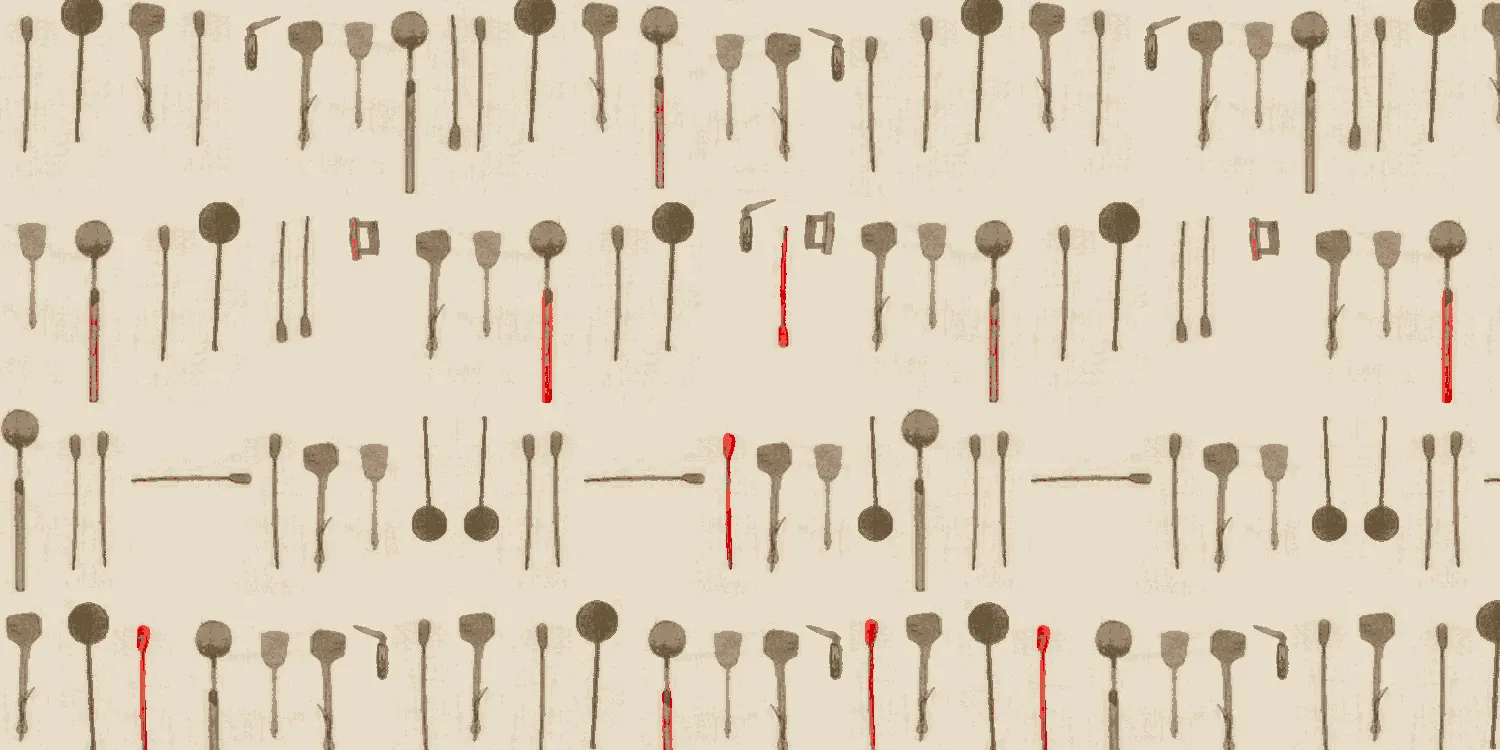
Unlike modern spoons, the ancient bronze spoons found in museums feature long, pointed bowls. Some are broken, bent, or dented; having been individually hand-hammered, each one possesses a unique shape and character — much like the distinct expressions found on human faces. Layers of history — formed by the heat and cold, sweetness and saltiness of the foods they once held — seemed to weave a story of their own. When I laid these old spoons out side by side, hoping to translate their unique ‘expressions’ into patterns, a new kind of image emerged. The meeting of the spoon’s rounded bowl and straight handle evoked the look of a musical score or a diagram succinctly illustrating the history of our culinary culture. While the forms consist simply of circles and lines, I crafted the design to capture the tactile quality of handwork, aiming to convey the textures and traces of time embedded within them. I used black ink as the base color, adding accents of red here and there. The design works beautifully as a tablecloth carrying this narrative, but it is perhaps even more striking as wallpaper, where it evokes a profound sense of the passage of time.
* Bangja Brass Antique Spoon and Chopstick