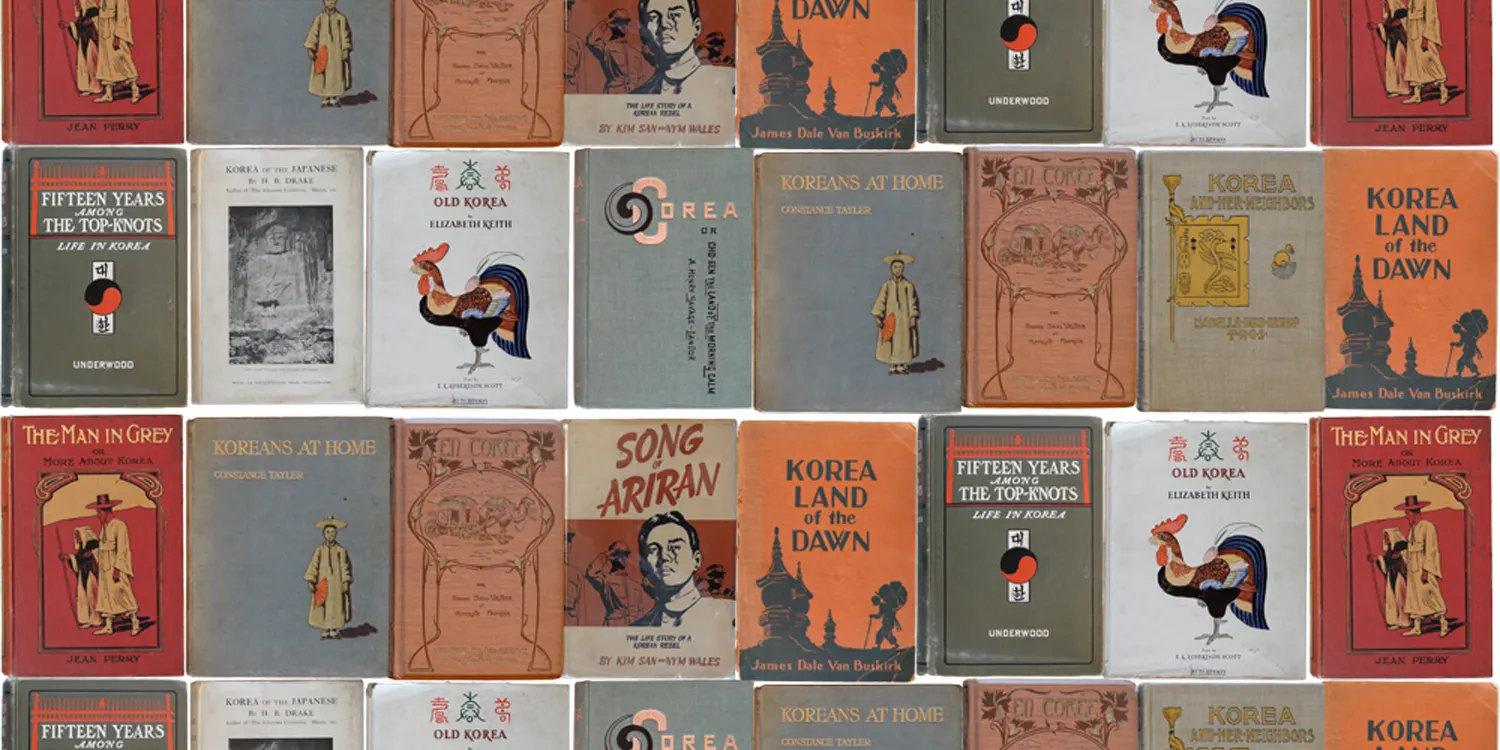
How did Korea appear to the blue-eyed Westerners who traveled through China to reach this land — half a world away — in search of a new world? How did they record a country where unpretentious people in simple cotton clothes slurped down steaming bowls of hearty soup; where the populace revered the monarch of a five-hundred-year-old dynasty and honored their elders; and where people used their own unique language and observed rites of passage with sincere devotion?
Unlike those born and raised in this land, travelers saw everything as new and exotic. There are books that introduced these experiences to the West through writing, photography, and illustrations—titles such as ‘Korea: Land of the Dawn’, and ‘Koreans at Home’. Produced in the compact yet substantial format typical of publications from that era, these books exude an exotic atmosphere right from their covers.
Contemporary British artist and Korean resident Simon Morley created a series of monochromatically white artworks based on the book covers from the collection of Martin Uden, the former British Ambassador to South Korea. These books contain vivid records of Korean history and daily life spanning the 19th and 20th centuries. As the cover serves as a symbolic image representing the book itself, this collection of covers offers a glimpse into a Westerner’s impression of Korea. The works — rendered in a uniform white tone with titles and illustrations given a three-dimensional effect — create a visual experience where details emerge only as the viewer approaches.
This work draws inspiration from the traditional chaekgado (painting of books and scholarly objects) while incorporating the symbolic and design elements of the original book covers from Martin Uden’s collection. By omitting fine details and focusing simply on the surface, the artist captures the passage of time and the stories embedded within through textures and colors that evoke a sense of age and handling.
A key step in the creative process involves color separation. Rendering the colors—derived from the photo-engraving process—in an aged palette evokes a hazy, nostalgic sense of the stories and time imbued in the books. The design transforms text-filled pages —r epresenting stories of our lives observed through a foreigner’s eyes and transcribed into a foreign language — into a decorative pattern. Faded vermilion and blue-gray squares evoke images of traditional Korean roof tiles or stone walls, while the densely packed arrangement of books calls to mind the chaekgado found in Korean folk art. When installed as a curtain, the piece creates the impression of a substantial bookshelf, though it works equally well as a sofa throw or a rug.
* Books and Scholars’ Utensils