In Eastern cultures, fish symbolize fertility and abundance because they lay large numbers of eggs. Carp represent men, catfish represent women, and schools of small fish signify the flourishing of descendants; consequently, fish motifs frequently appear on ceramics and furniture. Fish designs are also commonly found in old Buddhist temples. Since fish keep their eyes open even while sleeping, they serve as a reminder to remain vigilant and spiritually awake amidst chaos and distraction. Wooden fish carvings and fish-shaped wind chimes—often seen at temples—are prime examples of this symbolism.
Fish motifs also frequently appear on the stationery and writing accessories favored by seonbi (Confucian scholars). There is a legend that every spring, carp in the upper reaches of the Yellow River vie to leap up the powerful currents of the Longmen (Dragon’s Gate) gorge; those that succeed are said to transform into dragons. The term deungyongmun — meaning a gateway to success or advancement — originated from this story. Scholars often likened their own rise to high office through diligent study amidst adversity to this legend, which is why they cherished items adorned with fish patterns.
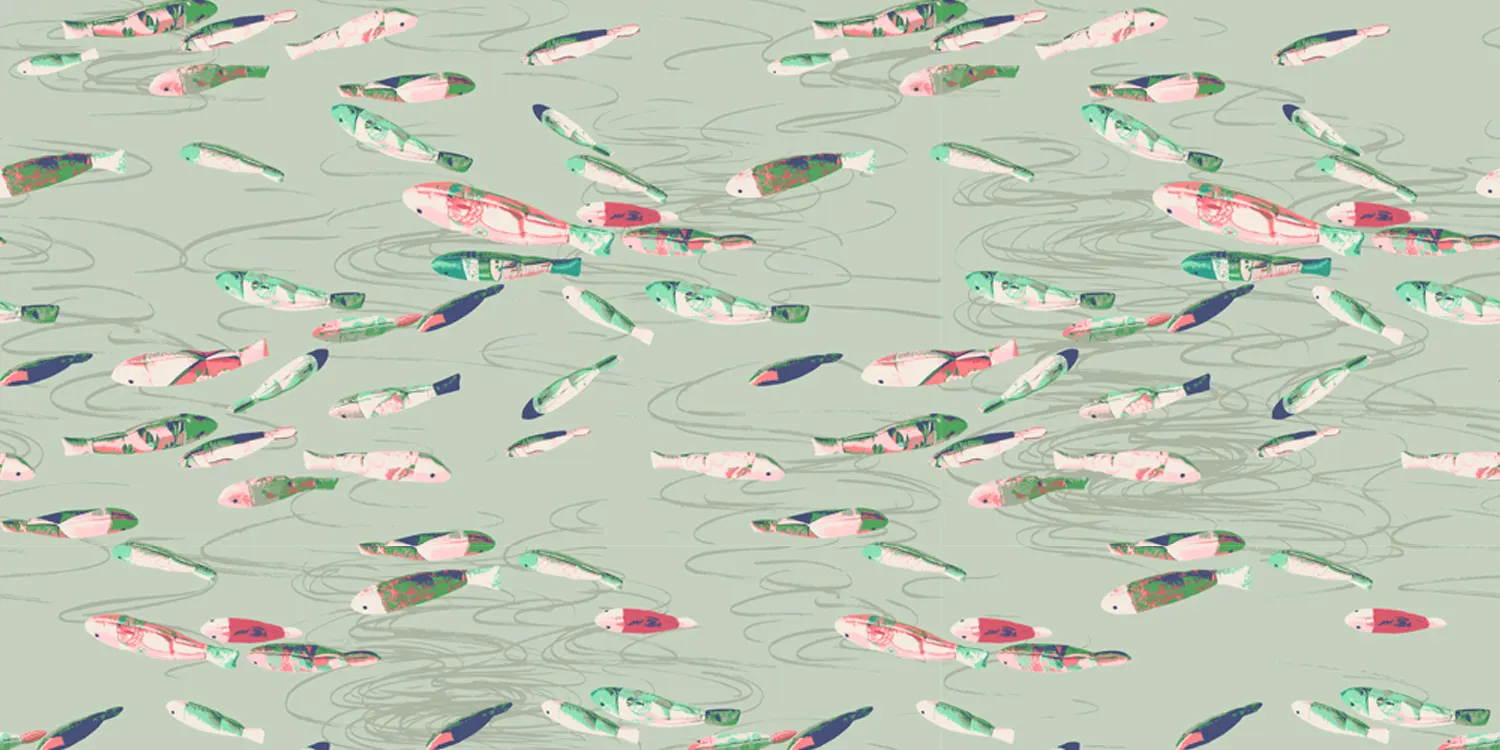
Having frequently encountered such stories, I often thought about the potential to weave various narratives using fish as a subject. Then, I came across a Joseon-era folk painting known as ‘Eorakdo’ (‘Painting of the Joy of Fish’). This artwork captures the human longing for the peaceful world inhabited by fish. Upon seeing an example of ‘Eorakdo’ which depicts fish swimming in harmony, I was inspired to create a new painting. These fish represent constant vigilance, abundance, and success, all while embodying a sense of tranquil playfulness.
I had accumulated small fabric scraps left over from previous projects over time. Reluctant to discard them, I saved the scraps and used them to piece together fish figures inspired by ‘Eorakdo’. Each scrap held its own unique story, and by stitching them together to form fish, they gained new, collective meaning.
For the background, I digitally processed a pattern titled “Cloud Gazing,” which was created by isolating and reinterpreting the clouds found in Jeong Seon’s (1676-1759) painting ‘Gwandong Palgyeong’ (‘Eight Scenic Views of the Gwandong Region’). I photographed the hand-stitched fish, processed the images in Photoshop, and arranged them individually onto the digital canvas. I created a scene where the fish swim freely and peacefully—reminiscent of the fish in ‘Eorakdo’—thereby capturing the very essence of eorak. Thus, the ‘River Fish’ pattern was born. It is a signature pattern created over a long period through a blend of digital and analog techniques.
* Fish and Crab Painting-River Fish