Among the paintings of the Joseon Dynasty, minhwa (Korean folk painting) stands out as a genre that flourished brilliantly while reflecting the unique sentiments of the Korean people. These works are not merely paintings defined by formal artistic language; many are rich in symbolic meaning. By imbuing diverse subjects with symbolism and reflecting reality as it is — while incorporating bold colors and elements of humor — minhwa achieves a style that is at once unpretentious and quintessentially Korean. Because they were created not out of a desire for technical perfection but to honestly capture the stories of everyday life, these paintings — even centuries later — are expressive in ways that feel remarkably modern and practical. Perhaps by boldly breaking away from conventional artistic principles, the artists found greater freedom to depict an ideal world rather than mere reality.
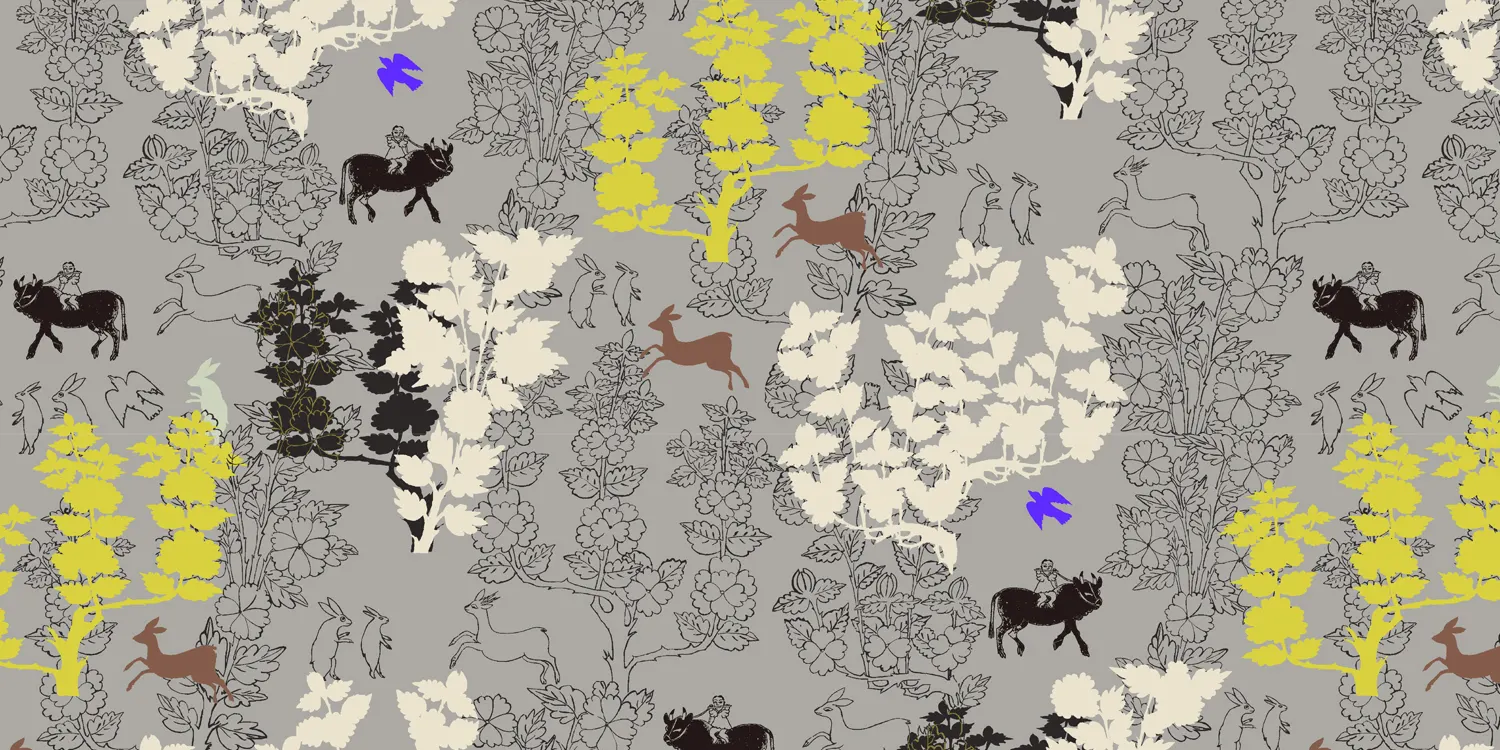
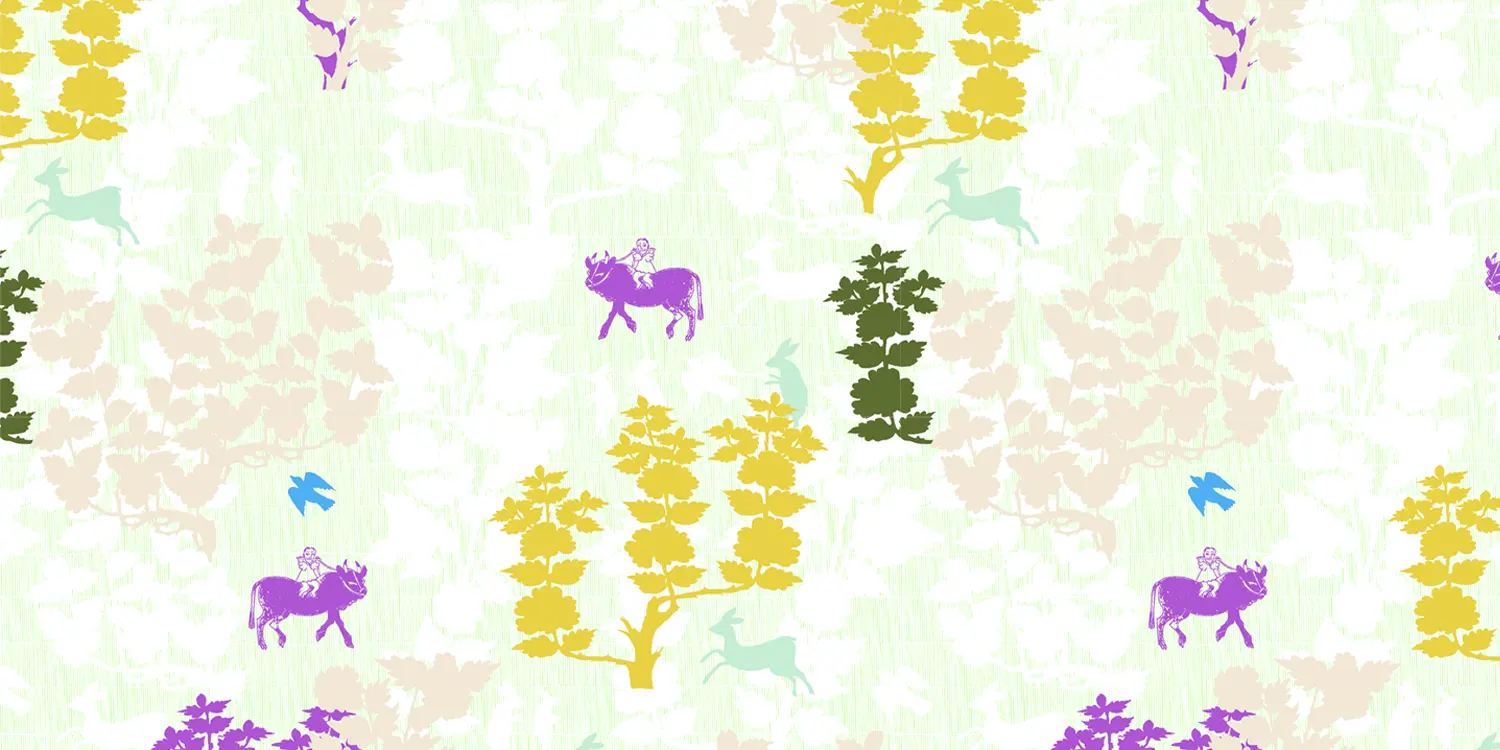
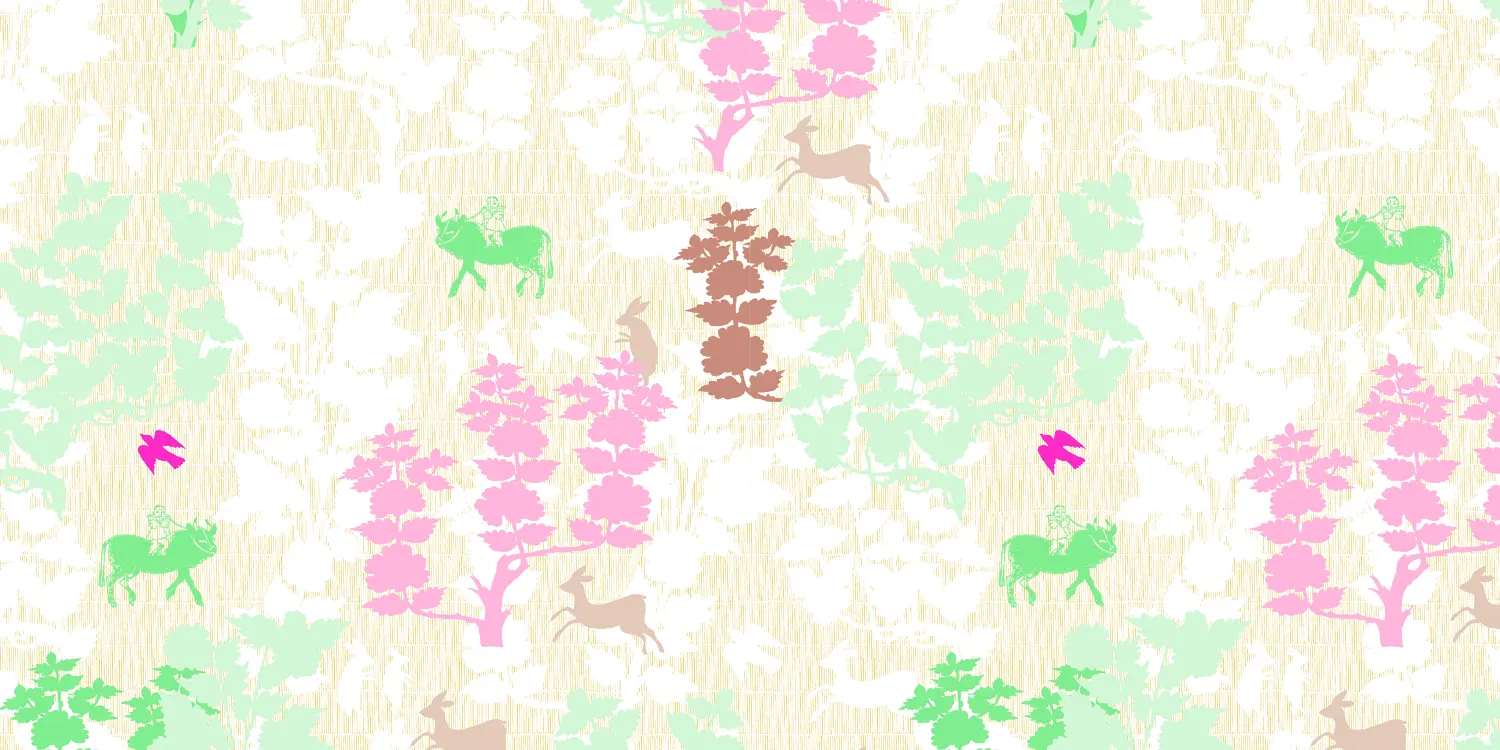
While viewing the collection of Mr. Yoon Yeol-su at the Gahoe Museum, I encountered a piece of minhwa that resembled a sketch. In the four-panel painting, creatures such as deer and rabbits appeared to be flitting about; their movements were charming and delightful. It was the most minimalist and modern minhwa I had ever seen. Skillfully capturing the spirits of the mountains, the painting depicts a symbolic forest of an ideal world using simple lines, without relying on shading.
Archaeologist Kang Woo-bang once remarked that the appeal of such folk paintings lies in their flatness. Despite this two-dimensional quality, they accurately capture the movement of animals — depicting them soaring through an idealized realm, with a boy playing a flute atop an ox that appears to float in mid-air. In transforming this artwork — which evokes dreams and fantasies through images of flying birds, deer, and rabbits—into a pattern, the aim was to authentically convey that mystical world. The design motifs were traced, layered, and selectively colored. A sense of reality within this utopia was rendered through grayish shading, while textured linen-like fabrics were employed. Because the work completely eschews a sense of spatial depth, it creates a more striking effect when applied to a wall as wallpaper rather than used as a curtain.
* Flying Animals