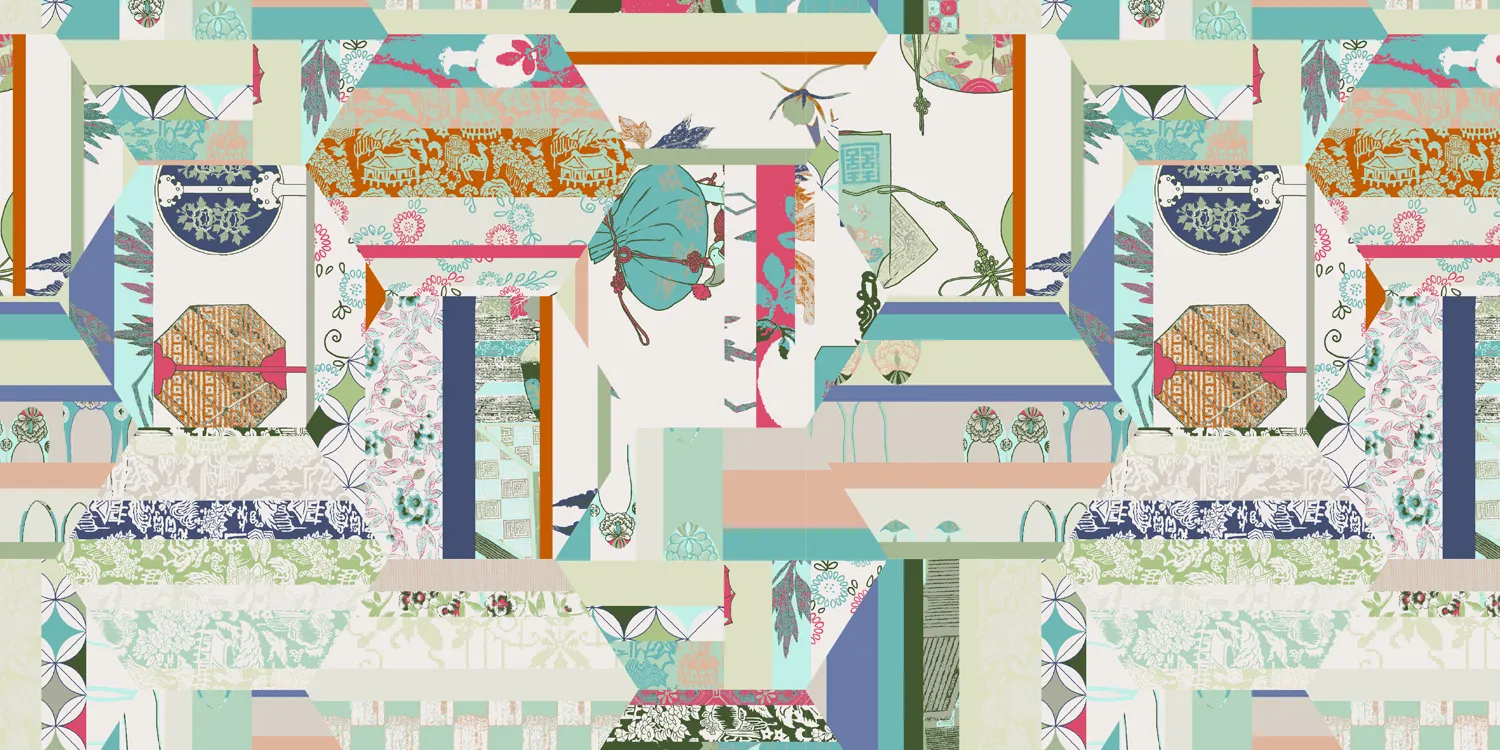
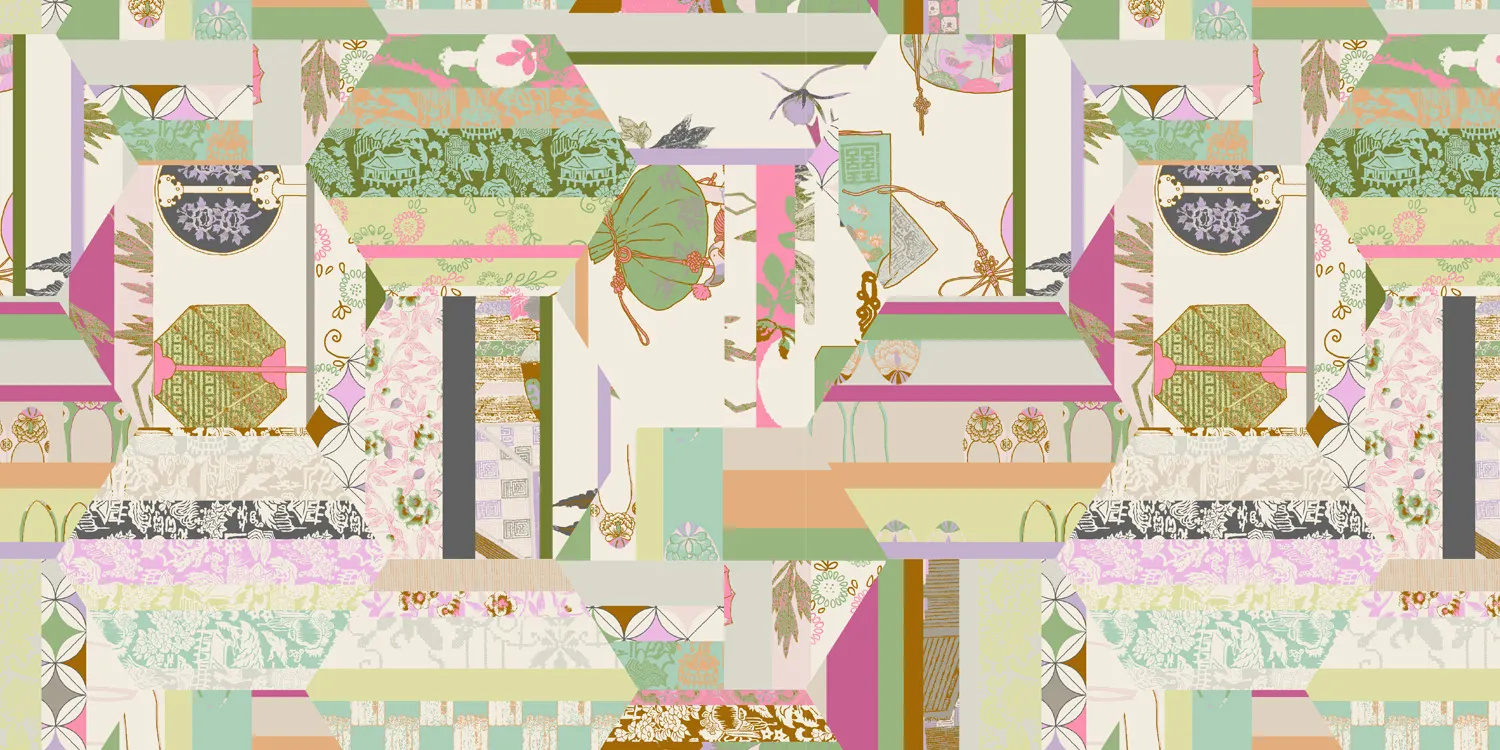
Traces of the art of piecing together fabric scraps can be found throughout human history, across all times and places. In ancient times, the lack of technology to produce large sheets of fabric likely led people to join smaller pieces together. The technique itself is said to date back as far as ancient Egypt. Korea has its own tradition of jogakbo (patchwork wrapping cloths), which originated as items crafted in the gyubang — the boudoir culture of the women’s quarters of a traditional home. Today, the value of this traditional patchwork is highly esteemed, appreciated both for the frugality of repurposing fabric scraps and for the aesthetic beauty created by the arrangement of the pieces. Korean jogakbo has gained significant recognition—largely through the efforts of prominent collectors like Heo Dong-hwa and collectors of gyubang culture in Gangneung — and has become an important part of the nation’s cultural heritage.
* Iki Hexagon