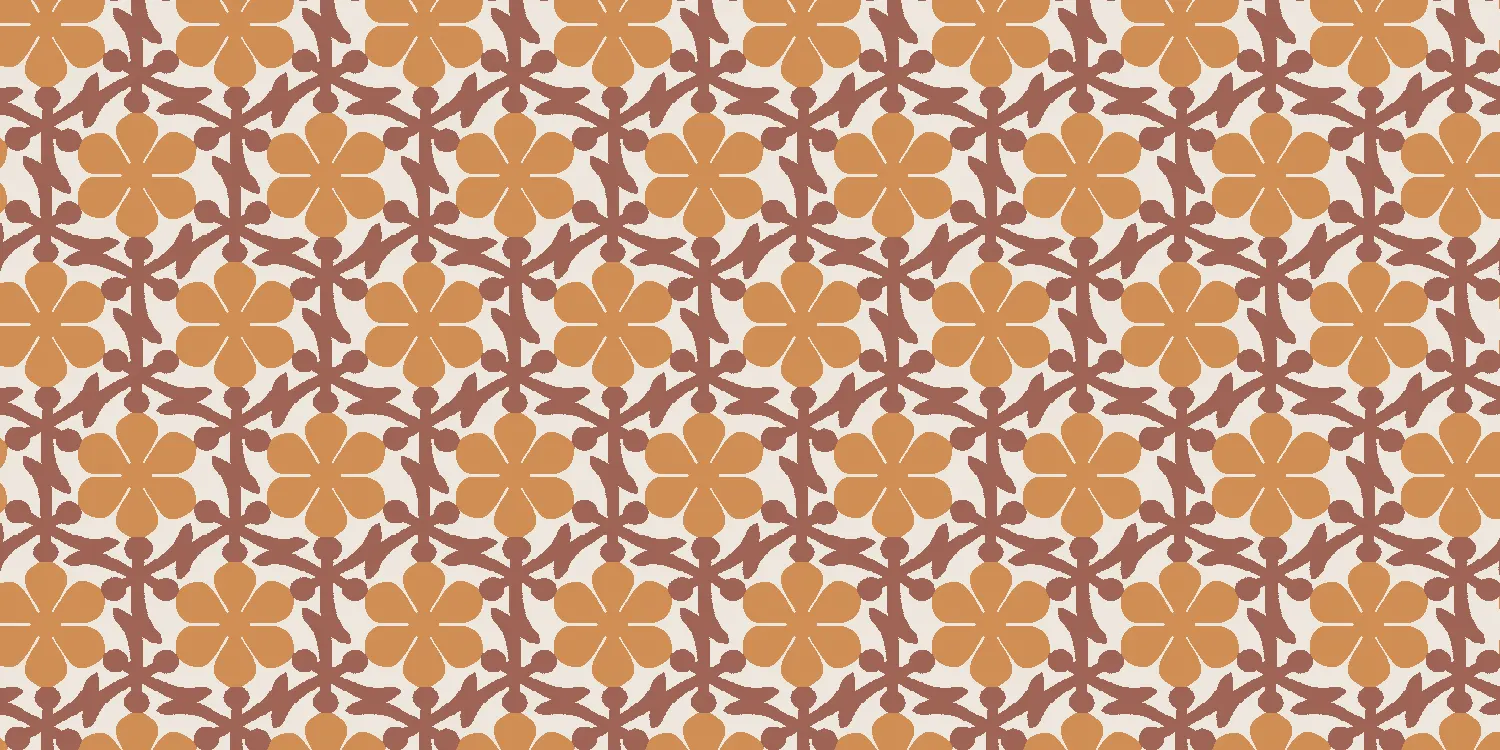
The term soseul implies ‘rising up’, carrying meanings such as ‘sprouting’ or ‘standing out in relief.’ The soseul-moran (raised peony) pattern was designed based on the raised lattice patterns found on the doors of Korean Buddhist temples, where the peony motifs appear to emerge from the surface. Lattice doors featuring carved floral motifs go by various names depending on their specific designs—such as soseul-kkot-mun (raised flower pattern), soseul-min-kkot-mun (raised plain flower pattern), and soseul-moran-kkot-mun (raised peony pattern) — and this particular design was inspired by the raised peony lattice doors on the central bay of the Daeungjeon Hall at Bulgapsa Temple in Yeonggwang-gun, Jeollanam-do.
The peony is filled with seeds, seemingly embodying the life force’s inherent drive to flourish endlessly. Consequently, while it signifies wealth and honor in the culture of the traditional women’s quarters, it symbolizes enlightenment in Buddhism. Scriptures recount that a rain of flowers fell from the heavens when Shakyamuni Buddha attained enlightenment or entered a state of deep meditation after delivering a sermon. The Dharma Hall represents Yeongsanhoesang — the assembly where Shakyamuni Buddha expounded the Dharma — while the hall’s floral-latticed doors are likened to the rain of flowers that fell upon that gathering. The bit-kkotsalmun (diagonal floral-lattice door) features a lattice woven by crossing slats at a 45-degree angle, adorned with carved peony motifs. Drawing inspiration from the soteul-bit-kkotsalmun — a variation that incorporates vertical slats (jangsal) — this design captures a sense of volume and depth through an all-over, continuous pattern. The design has been adapted for various materials using techniques such as inlaid tiling and digital laser cutting.
* Soaring Peony